I haven't been doing a very good job "moderating" #slowAandPchat. Once the opening of school approached, I put the chat on the back burner to focus on the First Day and to focus on enjoying the last days of summer with my two kids.
So, here is what I propose: instead of a weekly theme or question, why don't we simply let #slowAandPchat be a hashtag for ongoing conversation, exchange of ideas, and the posting of questions all related to the teaching and learning of A&P? While there are only of few members of our fledgling chat group, the posts have been awesome. I have learned much from my K-16 colleagues and I think we have much more to offer. I am trying several new ideas this year in our classroom and I would like to share. Not to boast, but to get good feedback from others who can provide an objective critical viewpoint. Or advice if they have been down the same road.
I will toss this out there to our regular contributors for discussion. Thanks.
Showing posts with label slowAandPchat. Show all posts
Showing posts with label slowAandPchat. Show all posts
Monday, September 14, 2015

Thursday, July 30, 2015
Week Starting 7/18/15 Compilation: What Are the Essentials of A&P?
For week two (starting July 18, 2015) of our #slowAandPchat, we discussed the essentials of our class content and ideas.

I picked this topic because we would need to spend months and months (actually years) studying A&P in enough depth and breadth to do it justice, yet only have one (maybe two) semesters at hand. The discussions that ensued were very good and are compiled below:
Pete VanKempen (@MrVK) brought-up how how the respiratory and circulatory systems work jointly to bring in oxygen, deliver it to end-tissues, pick-up carbon dioxide from those tissues and release it into the atmosphere.
Pete also stressed the importance of the respiratory system and digestive systems in oxygen and nutrient acquisition, conversion to usable energy (ATP) and the excretion of waste products.
Gerry Marchand (@gm8585) wants his students to learn collaboratively, efficiently and without fear of being wrong/failing.
Gerry also echoed the sentiment that the interconnectedness and interdependence of body systems is key.
As part of his final exam, Chris Baker (@bakerhhhs) asks several questions (here) that cause students to examine in interconnectedness of systems.
Chris and Gardner (@VirtualGardner) feel that a deep understanding of homeostatic mechanisms is essential for understanding the correlation between stimuli, receptors, integration centers, set points and effectors. It is this understanding that enables clinicians to correlate physical findings with underlying physiological processes.

I picked this topic because we would need to spend months and months (actually years) studying A&P in enough depth and breadth to do it justice, yet only have one (maybe two) semesters at hand. The discussions that ensued were very good and are compiled below:
Pete VanKempen (@MrVK) brought-up how how the respiratory and circulatory systems work jointly to bring in oxygen, deliver it to end-tissues, pick-up carbon dioxide from those tissues and release it into the atmosphere.
Pete also stressed the importance of the respiratory system and digestive systems in oxygen and nutrient acquisition, conversion to usable energy (ATP) and the excretion of waste products.
Gerry Marchand (@gm8585) wants his students to learn collaboratively, efficiently and without fear of being wrong/failing.
Gerry also echoed the sentiment that the interconnectedness and interdependence of body systems is key.
As part of his final exam, Chris Baker (@bakerhhhs) asks several questions (here) that cause students to examine in interconnectedness of systems.
Chris and Gardner (@VirtualGardner) feel that a deep understanding of homeostatic mechanisms is essential for understanding the correlation between stimuli, receptors, integration centers, set points and effectors. It is this understanding that enables clinicians to correlate physical findings with underlying physiological processes.
Sunday, July 19, 2015
Week Starting 7/11/15 Compilation: What Sets Your Class Apart
Well, we have one week of #slowAandPchat under our belts! Our discussion centered around the unique qualities of our classrooms:


Personally, I enjoyed the conversations and questions that stemmed from tweeted responses. Here is a summary of the main ideas that were shared as well as applicable links:
- Gerry Marchand (@gm8585) from Huntley, Illinois makes videos with trailers (example) to draw in and peak his students interest. This clip was very Blair Witchy:
- Gerry also holds an Amazing Race type field trip to the Chicago Museum of Science and Industry. Prizes are donated from local businesses!
- Gerry uses the flipped classroom model to help lessen the burden of lecturing in class
- Chris Ludwig (@chrisludwig) from La Junta, Colorado and his students visit a local professors' human cadaver lab. The dissection they see is the culmination of one years' worth of work. Highlights includes smokers' lungs and implanted pacemakers.
- Chris's students create digital portfolios using Google Sites.
- Erika Factor (@erikafactor) pushes her students to prepare for the material and time management skills required in college A&P. She finds that focusing on study skills helps students adjust to the sheer volume of material, as well as planning-out the semester to the day.
- Pete VanKempen (@MrVK) from Coopersville, Michigan uses cow and sheep eyes and hearts procured from local butchers for dissection. In addition, he uses cats for muscle and internal anatomy.
- Cara Johnson (@AHSAnatomy) from Allen, Texas vacuum seals her cats and uses them for the following five dissections: integumentary, muscular, skeletal, digestive and CV
- Cara also borrows the local CC's @syndaver synthetic cadaver. Her students take selfies with different portions of the model, which an explanatory blurb and tweet them out using the #syndaverselfie15 hashtag:
- Danielle Royer (@AnatomyRoyer) from Denver, Colorado uses ultrasound scanning to give students a glimps of their internal anatomy
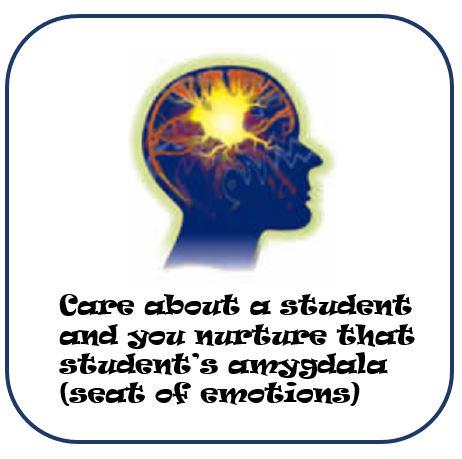
- Dr. Ellen Weber (@ellenfweber) from Rochester, New York looks at the relationship between the amygdala, student emotional well being and student learning:
- Chris Baker (@bakerhhhs) from Horsham, PA teaches his students the basics of assessing emergency scenes, obtaining vital signs and H&P's, developing different diagnoses, clinical impressions and treatment plans.
- Chris's students also perform post-thoracotomy endotracheal intubation on dissected rats and pigs:
Participants: if any of the above is inaccurate, misinterpreted, incorrect or just plain missing, PLEASE let me know and I will fix!
Thanks again for a great first week and for your enthusiasm and time. I can foresee these chats and summaries becoming a very useful and well-used and shared resource.
Friday, July 10, 2015
Launch of #slowAandPchat!
Thank you for joining the first #slowAandPchat!
RATIONALE
All of us are busy with school, teaching, grad classes, family, part-time jobs and the daily craziness of life. While there are many traditional education-based Twitter chats out there, I believe that the "slow" format allows more time to read posts, process information, respond to the weekly topic, ask more follow up or clarifying questions and exchange ideas.
GOALS
I have several goals for this chat. I hope to add more or modify these with your input as we progress and develop as a group:
I will post one question or topic per week (shooting for every Saturday) and we will have the entire week to mull over, discuss, ask questions and exchange ideas. The initial post will be using the #slowAandPchat hashtag in the traditional Q1 format (in the event we have a need for a possible Q2 or Q3). Please tweet responses/replies/questions in the A1 (or A2 A3) format along with the #slowAandPchat hashtag (for easy searching).
At the end of the week I will summarize/compile all tweets into this blog for ease of reading and future reference.
TOPICS
I have made a list of possible topics for upcoming chats (in no particular order). I hemmed and hawed as to whether or not publish this list or surprise you every week. I chose the former:
My own interests/profile can here found here, our classroom website here, and our dissection lab notebook/blog/work in progress may be found here.
RATIONALE
All of us are busy with school, teaching, grad classes, family, part-time jobs and the daily craziness of life. While there are many traditional education-based Twitter chats out there, I believe that the "slow" format allows more time to read posts, process information, respond to the weekly topic, ask more follow up or clarifying questions and exchange ideas.
GOALS
I have several goals for this chat. I hope to add more or modify these with your input as we progress and develop as a group:
- further develop PLNs of peers and experts who teach/instruct anatomy and physiology at the secondary or higher education levels
- share classroom successes with each other
- share failures and gain insight and assistance from this group
- exchange information, ideas and best practices
I will post one question or topic per week (shooting for every Saturday) and we will have the entire week to mull over, discuss, ask questions and exchange ideas. The initial post will be using the #slowAandPchat hashtag in the traditional Q1 format (in the event we have a need for a possible Q2 or Q3). Please tweet responses/replies/questions in the A1 (or A2 A3) format along with the #slowAandPchat hashtag (for easy searching).
At the end of the week I will summarize/compile all tweets into this blog for ease of reading and future reference.
TOPICS
I have made a list of possible topics for upcoming chats (in no particular order). I hemmed and hawed as to whether or not publish this list or surprise you every week. I chose the former:
- what would make Ss sign-up for your class? what sets your class apart from other A&P classes?
- class format: dissections done start to finish and didactic separately? integrated? how to synchronize lecture with dissections? is it possible?
- what are your end goals for your students?
- how do measure student success?
- stand-out labs or activities
- higher ed/medical schools: what do you need from us secondary folks?
- how do you address inadequate pre-existing knowledge?
- flippers: does it work? how does it work? any problems?
- what kinds of technology have you integrated into your teaching?
- how do you evaluate students (formative and summative)
- what does your course boil-down to? what are the essentials?
- what dissections (types of specimens) do you do and why?
- should we shorten the hashtag from #slowAandPchat to something else?
CONTACT INFO
I have created a Google Form to collect your basic contact information. I would like to share the resulting Google Sheet with participants in this group to use as a resource for out-of-Twitter contact (email, website URL, etc). The form is quick to fill-out, optional and can be found here.
My own interests/profile can here found here, our classroom website here, and our dissection lab notebook/blog/work in progress may be found here.
LET'S GET TO IT!
Lastly, I want to emphasize that this is OUR chat, not mine. We all have good ideas, practices and activities to offer. Although I think I am a pretty good instructor, I could be a lot better with your help and suggestions.
I hope you enjoy this chat and get a lot out of it!
Chris
Monday, July 6, 2015
#slowAandPchat starting this Saturday
Well, somebody's gotta do it. I decided to jump in and start #slowAandPchat. First topic/question will be posted this Saturday 7/11/15. To start with, format will be one topic/question per week using the #slowAandPchat hashtag (may be shortened, will have to discuss). At the end of the week I will comb through all responses and compile them into a blog post (here). I think the slowchat format used by David Theriault (#slowchatED) and Michael Fenton (#slowmathchat) will be most suitable, especially given the time and schedule limitations we all face. I find traditional Twitter chats, although rich with information, too fast-paced and I do not like the inherent time constraints.
I am excited to hear others thoughts, concerns, problems, questions and solutions regarding teaching A&P. Hopefully we will drum-up enough interest, learn from each other and take turns moderating and curating. Or this could fall flat on its face due to lack of interest or lack of awareness about the chat. No risk, no reward, right?

I am excited to hear others thoughts, concerns, problems, questions and solutions regarding teaching A&P. Hopefully we will drum-up enough interest, learn from each other and take turns moderating and curating. Or this could fall flat on its face due to lack of interest or lack of awareness about the chat. No risk, no reward, right?

Sunday, July 5, 2015
#slowAandPchat anyone?
I've got a few tech ideas I would like to try-out this year that hopefully will boost (my) efficiency, increase collaboration (between students, between students and myself and between teachers) and raise the bar for student published work:
- converting all my Windows files and storing them on GDrive (started this summer)
- adopt Google Sheets automatic rubrics for class projects (thank you Alice Keeler!)
- adopt Google Drive as our standard for collaboratively produced documents
- publish student work for public display using a combination of Sites, Slides and Blogger
Subscribe to:
Posts (Atom)